Deposit Return Scheme: Making a difference through recyclable drinks
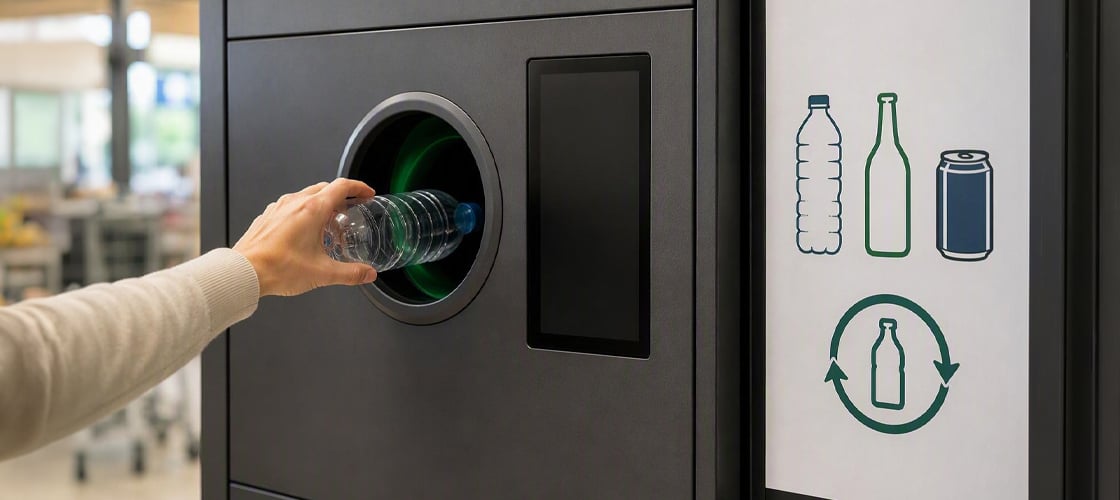
According to the Marine Conservation Society, an estimated 31 billion single-use drinks containers are purchased every year within the UK alone. When broken down further, this figure consists of 12 billion plastic bottles, 14 billion drink cans, and 5 billion glass bottles. While around 70 – 75% of this waste is currently recycled, 6.5 billion of these items still end up in landfill or else are burned down to create energy. That’s 17 million containers every single day.
When looking at the environmental impact of such waste, the UN Environment Programme reports that there is approximately 75 – 199 million tonnes of plastic currently residing in the ocean. To really help put this into perspective, the circa 269,000 tonnes of microplastics floating at the sea’s surface as we speak equals the weight of more than 1,300 adult blue whales. By 2050, the total weight of plastic in the ocean is projected to outweigh all the fish in the sea. Suffice to say, plastic is a colossal problem.
Thankfully, initiatives such as the Deposit Return Scheme (DRS) are helping to make a huge difference across the globe. With more than 40 countries and regions around the world implementing similar schemes, the DRS has seen particular success in Europe with countries such as Germany, Sweden, Norway, Estonia, and the Republic of Ireland reporting a reduction in litter by up to 80%. But what is the scheme and how does it work? Let’s find out.
What is the Deposit Return Scheme?
The DRS was designed to encourage a marked improvement in recycling drinks containers, one of the largest contributors to litter, landfill, and ocean plastic pollution. The scheme provides an incentive for the general public to return their used drinks containers by applying a small, redeemable deposit at the point of purchase. This deposit is then refunded to them when the item is dropped off at a designated collection point.
In April this year, the deposit was fixed at 20p per item and will be applied to PET plastic bottles and aluminium or steel cans between 150ml and 3 litres. Any drinks containers that are returned can be processed in one of two ways. These are either collected and scanned in person by a representative in-store, or via reverse vending machines (RVMs), which are exactly as they sound – static collection points that enable you to deposit drinks containers into a machine, which will eventually be located in supermarkets, convenience stores, and smaller outlets all over the UK.
The refund itself will be issued in cash, card, or as a voucher, and will not require any proof of the initial purchase. Provided all containers are clean and suitable for recycling – anyone can participate. This approach hopes to encourage recycling beyond the purchase-and-return model alone by rewarding litter picks and goodwill, all while reducing the environmental impact of plastic on our communities, beaches, and local wildlife.
The DRS is being implemented in England, Scotland, and Northern Ireland, with Wales working on its own separate solution. At present, the scheme will only be applicable to glass bottles in Wales.
How does the scheme work?
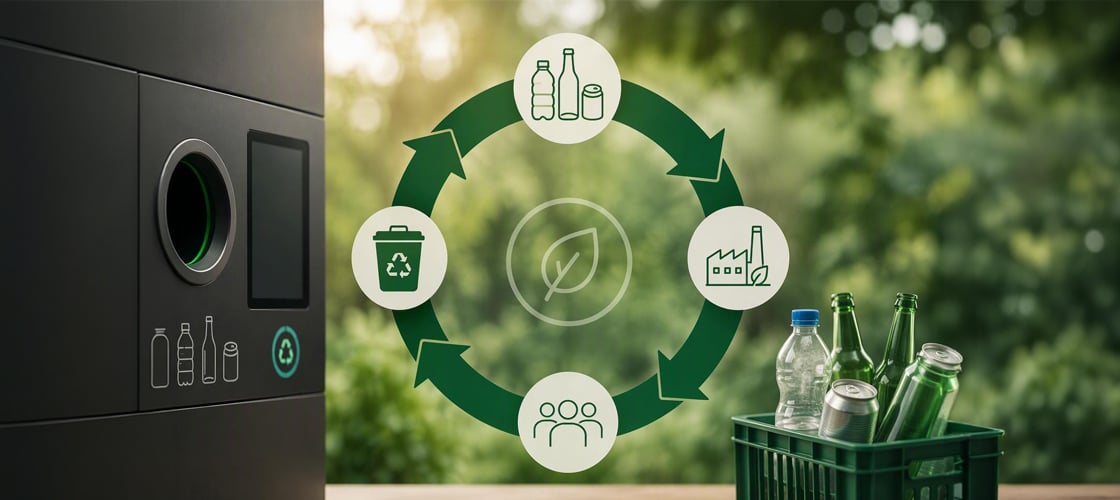
The scheme essentially consists of four very simple steps:
- You purchase a drink and pay your deposit as part of the cost
- You return the packaging to an approved collection point
- Your deposit is returned to you via your preferred method
- The drinks containers are collected for recycling
This initiative promises to be a considerable boon to the environment and ecosystems across the country, providing further means towards a more circular economy. In fact, according to the study ‘Littered with evidence’ by Reloop, in areas with a DRS in place, the average proportion of drinks containers in the litter stream was 54% lower after the DRS had been implemented. As such, the primary objectives of the UK’s DRS are perhaps unsurprisingly as follows:
- Significantly reduce litter
- Increase recycling rates to 90% or more
- Generate high-quality recyclable materials
- Complement broader packaging reforms (e.g. Extended Producer Responsibility)
To deliver and administer the scheme within the UK, a Deposit Management Organisation (DMO) was recently appointed by the government. Exchange for Change is a not-for-profit, industry-led body made up of drinks producers, retailers, and the wider supply chain dedicated to ensuring the UK DRS is a success. Largely funded by drinks producers who will provide and oversee collection points at retailers, operators of these collection points will receive a return handling fee (RHF) to cover the expenses required for hosting the equipment, the prices of which were confirmed by Exchange for Change in June 2026.
What does DRS mean for the waste industry?
It is estimated that the DRS will require around 45,000 reverse vending machines and return points at different retail locations and community hubs across the UK in order to effectively collect the anticipated influx of recyclable containers. This is a considerable undertaking, so it will take some time for the appropriate infrastructure to be put into place.
Once achieved, a large fleet of refuse collection vehicles will be required country-wide to collect and transport these recyclable materials for processing. This will categorically reshape several local authority fleets to sufficiently meet the new demand, seeing councils’ collection priorities evolve and change accordingly. An adjustment period will be necessary to ensure waste collection crews are prepped, equipped, and trained for this new way of working.
With the public now encouraged to return their recyclable drinks containers as part of the DRS, it stands to reason there will inevitably be a marginal reduction in recyclable materials collected by traditional refuse collection vehicles (RCVs). According to Gareth Rollings, Chair of the Local Authority Recycling Advisory Committee (LARAC), who spoke at the DRS Conference in April 2026, this will likely have an even greater impact on authorities operating Recycling Recovery Vehicles such as our Kerbloader vehicles, as these are specifically designed to collect this kind of waste. Rollings also suggested that reduced access to high-value materials such as PET and aluminium due to DRS could result in a shift from positive recycling income to net cost positions, so careful consideration of such factors is essential when evaluating future fleet renewals.
Finally, there is an exciting opportunity for local authorities when it comes to social value. The DRS has been created specifically to improve public behaviour by fostering a different mindset when it comes to recycling plastic waste. This lends itself to educational and inspirational initiatives that demonstrate the importance of a sustainable approach to waste management and the public’s role in developing a circular economy within the UK. Our award-winning Dennis to the Rescue mobile classroom is ideally placed for this purpose – spreading the message of sustainability among young people alongside engaging resources by Skips Educational.
If you would like to learn more about what the DRS means for you, your residents, and your collection crews, please don’t hesitate to get in touch with our team.
Read more articles from Eagle Eye
Sep
22
Our new Chester-le-Street Service Centre is now open!
On September 3rd 2026, we celebrated the opening of our new Chester-le-Street Service Centre in Durham, County Durham. The new location will strengthen our aftermarket support in the Northeast of...

Sep
22
Spotlight On: Nicola Case, Regional Sales Manager
Nicola Case has had an incredible career in Sales over the past 40 years and is now a highly respected, well-established Regional Sales Manager at Dennis Eagle. Having built a successful career in ...
Sep
22
New food waste fleet finds its feet with Durham County Council
Durham County Council prides itself on being ahead of the curve when it comes to waste collection. Prior to the announcement that Simpler Recycling legislation would be coming into effect in Octobe...


