Long live the Elite: Celebrating more than 30 years of innovation
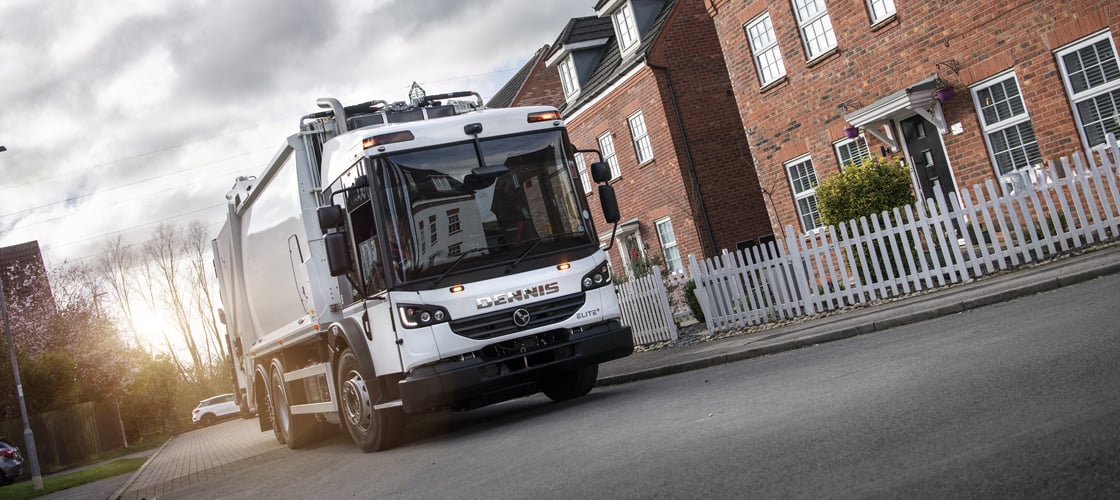
In 1985, a significant moment in history was marked in Warwick when Hestair Dennis and Hestair Eagle first came together as a single company. Originally separate entities, the ‘Dennis’ business once specialised in the design and manufacture of RCV chassis, and the ‘Eagle’ entity had made its name as a key player in the development of RCV bodies. Once the companies eventually merged, this unknowingly became the catalyst for revolutionary change that would redefine the waste and recycling industry as we know it today.
A brief history of the Elite and its origins
The very first chassis to be developed following the Hestair Dennis and Hestair Eagle merger, the 1985 Delta was soon introduced to the world of waste. This was generally accompanied by an already well-established Phoenix body, which first originated in 1979, and later paved the way for a new ‘facelifted’ version of the Delta model in 1988. Back then, manufacturing output of RCVs was roughly 350 vehicles per year – around a quarter of what Dennis Eagle is capable of producing today.
In the years that followed the Delta’s release, to retain our impressive market share and continue our commitment to delivering innovative refuse solutions, we needed to introduce a bold, new and improved chassis product to the market. The decision was made to begin development on what would eventually become the first Elite chassis. Geoff Rigg, Aftermarket Director at Dennis Eagle noted: “I was an apprentice at the time and remember seeing the new vehicle for the first time on the drawing board in around 1989. It was launched in 1992 and although it was a success, nobody could have realised just how influential it would be.”
The Elite promised to demonstrate a truly radical change from the Delta, with RCV operator safety and comfort top priorities. “The introduction of our first one-step, low-entry cab, the Elite, made a substantial impression on the industry when it debuted back in 1992,” said Keith Day, Managing Director, Dennis Eagle. “This revolutionised safety for RCV drivers and crews by enabling easier entry and exit during collection rounds. In fact, the hallmark concepts that stemmed from our original Elite – low entry, a flat floor, and high visibility – is still just as relevant and true of today’s designs, proving just how instrumental it was.”
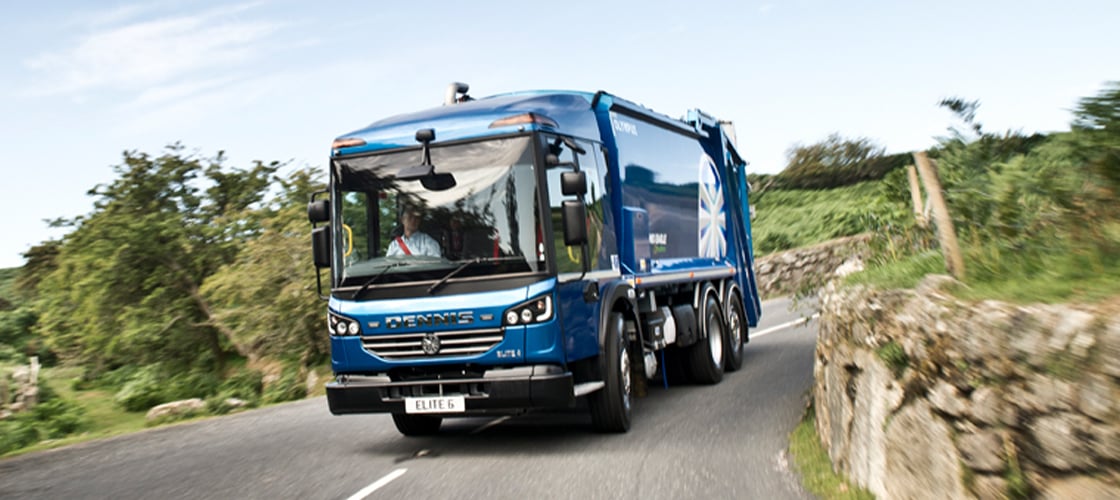
The Elite chassis made its initial debut in June of 1992 at The Institute of Waste Management’s exhibition in Torquay, and the rest is history. Over a decade later in 2003, the Elite 2 range of vehicles came into being, carrying on the excellent work started by its legendary predecessor. Another decade passed, and the now well-loved and highly recognised Elite 6 next took on the mantle and legacy of the Elite name. After entering the market in 2013, the Elite 6 built upon the successes of the illustrious Elite and Elite 2 lines, with a keen focus on operator safety, comfort, and efficiency, giving drivers more control and visibility than ever before.
“We’ve continued to refine and evolve our Elite chassis capabilities with the Elite 2 and Elite 6 over the years through the steady introduction of state-of-the-art features and safety measures that give RCV operators the best possible in-cab experience,” Keith added. “Our dedication to enhancing this good work is clear in the development of our most recent chassis product, the Elite+. While this already surpasses anything the market has seen previously, we’re constantly seeking new innovations and improvements that can push its potential even further.”
The Elite legacy lives on
Today, the Elite+ is now widely respected as the UK’s industry-leading RCV chassis. Launched in 2022, the Elite+ was introduced during a difficult time for the industry. Driver shortages were challenging operations, emphasising the criticality of their role in waste management. This prompted a shift in how cabs could be enhanced to improve the driving experience, from ergonomics to ease-of-use, and especially day-to-day safety.
The Elite+ therefore became even safer, even more intuitive, and even more comfortable than the Elite models that came before it, prioritising the needs of drivers and crews far beyond the accomplishments of the Elite 2 and Elite 6. This led to the creation of a truly modern workstation with the best direct vision of any RCV on the UK’s roads, making it a market leader in its own right.
Drivers and crews across the country have noted the ongoing improvements in the Elite+ cab’s configuration and visibility, with certain features particularly valued in rural areas where difficult manoeuvres are often required. “The new Elite+ cab is a real favourite,” said Robin Moore, Assistant Operations Manager (Fleet and Asset), Greater Cambridge Shared Waste Service. “Small refinements such as the heating and ventilation system, radio speakers, and the benefit of extra cupholders all make it a comfortable and enjoyable environment for the crews. Every time we have a new intake of vehicles we get asked if they will have the new Elite+ cab!”
Oustanding safety and innovative excellence
A core part of what makes our Elite+ cab so successful is its integrated safety features. Still the lowest one-step entry on the market, this makes it easy for crews to safely get in and out of the cab during collections, a feature that has remained and been refined since its introduction to the original Elite in the early 90s. This low-entry step is further supported by anti-slip material for use in all weathers.
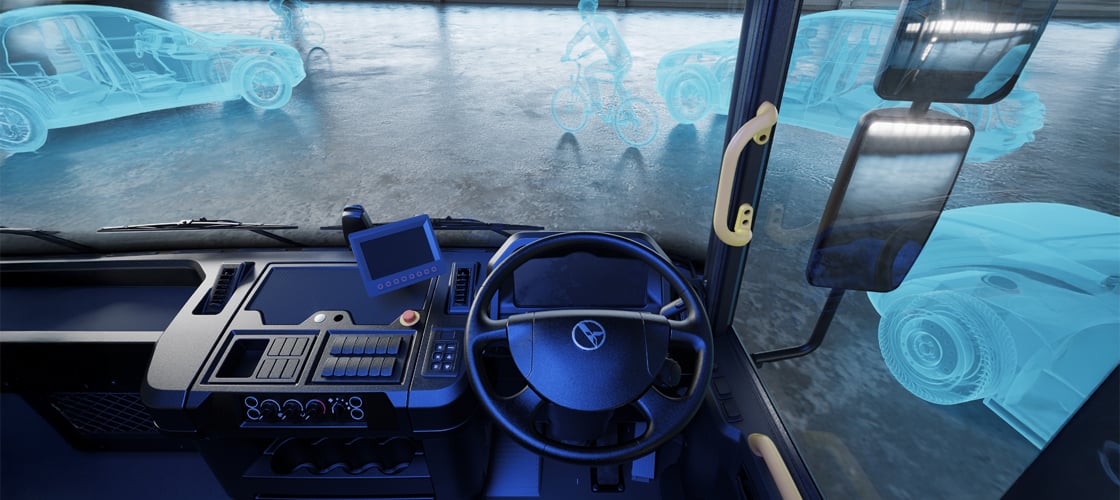
The floor itself remains obstacle-free, allowing crews to readily walk through the cab with ease, and the driving seat is positioned low enough to put drivers closer to eye-level with other road users, encouraging direct eye contact and reducing blind spots. “This really helps drivers anticipate the actions of pedestrians and cyclists, improving communication and therefore safety,” added Geoff.
Recognised by Transport for London’s Direct Vision Standard (DVS), the Elite+ is rated higher for visibility than any other vehicle available today. Large panoramic windows around the cab provide a clear, wide-angle view of the road and enhanced visibility of the vehicle’s surroundings, aiding safer manoeuvres in tight spaces and offering a better view of the working area at the rear. Additional features such as autonomous emergency braking ensure the RCV’s brakes are applied should a vehicle be approached too quickly, and electronic stability maintains the RCV’s suspension, applying air and braking as needed. Ultimately, the Elite+ cab has been ergonomically refined and purposefully designed to put the driver in more control than ever before.
“The outstanding working environment we’ve produced for both drivers and crews makes our cabs safer, easier to use, and much more comfortable, helping to make them feel more valued and positive about their essential roles within our industry,” said Richard Taylor, Sales and Marketing Director at Dennis Eagle. “From this, employers gain benefits across the full spectrum of their operations, including increased productivity, staff retention, improved safety, and operational efficiency, all thanks to the Elite+ and the tireless efforts of our excellent engineers.”
Safety is our business’ first priority, extending far beyond the protection of RCV operators to vulnerable road users within the wider community. By combining low-entry, high visibility features, and unparalleled ergonomics, we develop high quality, high-performing RCVs that are safe by design. The Elite+ has come a long way since the Elite initially won over the industry more than 30 years ago, and we can promise our pursuit for innovative excellence does not stop here.


