Do your bit to reduce RCV fires: recycle batteries better
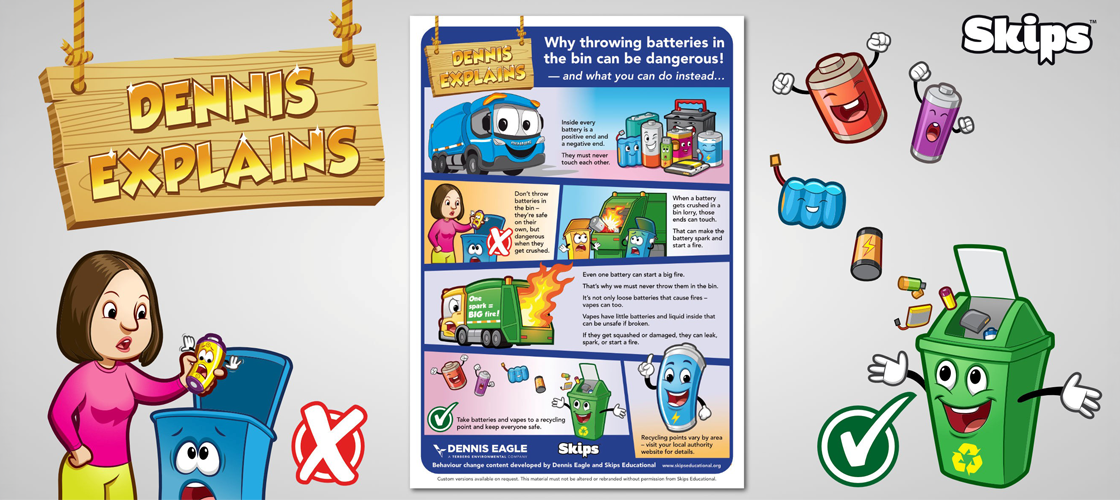
RCV fires happen every single day, and they’re unfortunately becoming more regular occurrences. This put RCV crews, the general public, the environment, and local infrastructure at risk, requiring urgent action to prevent the fires from escalating. More often than not, the cause of this is improperly disposed of batteries, one of the most commonplace household items. A lot of the time, this is simply down to the fact that many people are not aware of how to correctly dispose of their batteries, so will often throw these into general waste.
When disposed of incorrectly, however, lithium-ion batteries in particular pose a considerable threat to the safety of RCV crews and the wider community. When crushed within an RCV, the positive and negative ends of these batteries can meet, causing them to spark and enter what’s known as a ‘thermal runaway’. This is a chain reaction that causes intense fires very difficult to extinguish, reaching temperatures of up to 800 degrees. From here, it’s only a matter of time before the surrounding payload goes up in flames and needs to be dealt with urgently. This isn’t great news for the environment, with the fires causing air pollution levels to spike, putting the health of local residents at risk.
According to the Environmental Services Association, roughly six billion batteries were thrown away in the UK in 2024 alone, with the National Fire Chiefs Council recording over 1,200 RCV or waste facility fires directly related to batteries across this timeframe. This represents a staggering 71% increase from the previous 12 months. In fact, many of our customers have reported seeing a major uplift in battery-related fires in recent years. This is getting incredibly expensive, as damage to vehicles and infrastructure continues to drive up costs for councils, with a call now going out to potentially introduce universal kerbside collections.
Batteries are not the only offender, either. Vapes, which contain small batteries and liquid that can be unsafe if broken, and Waste Electrical and Electronic Equipment (WEEE) such as laptops, phones, and small household appliances are also largely to blame.
What’s the solution?
While kerbside collection of batteries is currently not available in all areas across the UK, thankfully, the answer to reducing the regularity of RCV fires is a simple one. This waste just needs to be disposed of correctly. There are three very straightforward and easy-to-follow steps to improving how batteries are discarded:
1. Don’t throw batteries in the general or recycling bin
This may seem like a fairly obvious solution, but many people simply aren’t aware that batteries cannot go into your usual rubbish. It’s just a case of educating residents, raising awareness, and remembering that every time a battery runs out, there are different rules for its disposal.
2. Take batteries, vapes, and WEEE to a recycling point
The next step after saving batteries from the fate of going into general waste is to take them to a designated recycling point, many of which specialise in collecting, recycling, or eliminating this kind of waste. This can be at the local tip, hardware stores, and even most supermarkets.
3. Help your residents locate their closest recycling point
If your residents don’t know where their nearest recycling point is, encourage them to locate this via your website. It is essential batteries don’t get mixed up with regular waste; directing them to recycling points in the local area will make a considerable difference.
Dennis Explains how to do the right thing
This year, we’re introducing a new series of free, downloadable educational resources called ‘Dennis Explains’. This covers key industry topics, challenges, and trends in a fun and engaging way, helping to educate your residents about waste management and improve their behaviour.
This month, Dennis explains how RCV battery fires can easily be prevented by encouraging smarter recycling. Help your residents start 2026 off right by providing this easy win to improving battery disposal. Please feel free to print off and hand out this important resource to your residents. We look forward to spreading the word about good waste management practice with Dennis Explains throughout the rest of the year.


